Clinical Trials
Leadership Program
About
Featured Module
Module 1-1Week of Oct 13, 2026

Explanatory and pragmatic trials

Trial intent, validity, and design choices that fit your purpose.

Primary ContentModule 1-1
ThemeTrial intentDuration10 minutes

Explore how explanatory and pragmatic trials answer complementary trial questions, from whether an intervention can work under controlled conditions to how it performs in routine care. Featuring an expert explanation from Dr. Merrick Zwarenstein, this module examines key design differences, the practical application of the PRECIS-2 wheel, trial validity, and randomization.

Key points

  • Distinguish characteristics of explanatory and pragmatic trials.
  • Explain internal and external validity, including the role of randomization.
  • Apply the PRECIS-2 wheel to assess where a trial falls on the explanatory–pragmatic spectrum.
Watch on YouTube ↗
ThemeTrial NavigatorDuration1 minute

Trial Protocol Navigator: Trial Intent

A brief demonstration of the Trial Protocol Navigator’s Trial Intent section.

Watch on YouTube ↗
Learning Activity

Prepare for your biweekly session

Read the attached paper before the session. Consider how differences in participant selection, recruitment, setting, intervention delivery, and follow-up influence each trial’s position on the explanatory - pragmatic continuum.

Come prepared to discuss:

  • The strengths and limitations of each design and how the choices fit the trial’s purpose.
  • What do these choices mean for internal validity and applicability to routine practice.
  • One key learning point and one question you would like to explore.

No written submission is required.

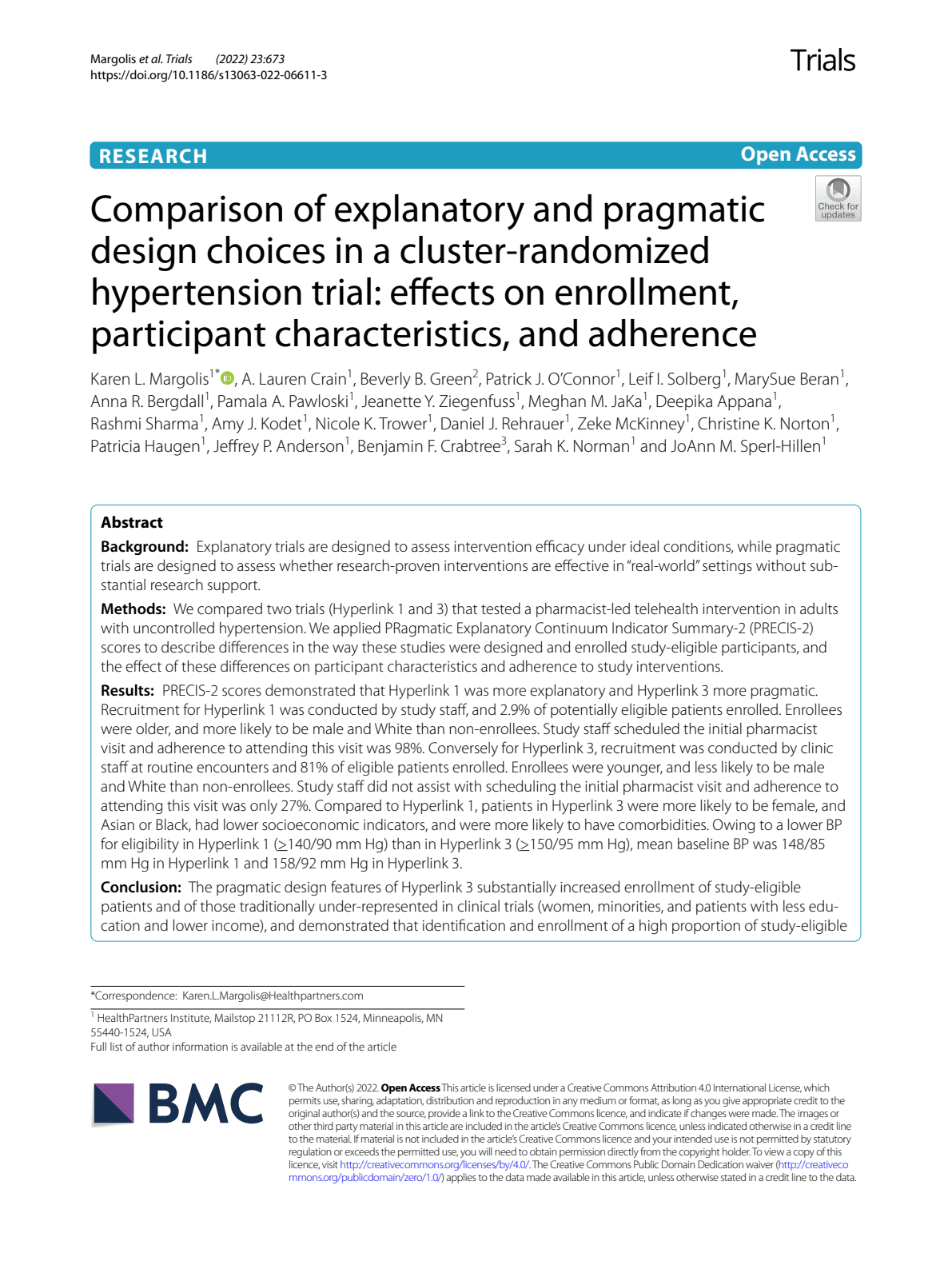
First page of Comparison of explanatory and pragmatic design choices in a cluster-randomized hypertension trial: effects on enrollment, participant characteristics, and adherence↗

Comparison of explanatory and pragmatic design choices in a cluster-randomized hypertension trial: effects on enrollment, participant characteristics, and adherence

Abstract

Background: Explanatory trials are designed to assess intervention efficacy under ideal conditions, while pragmatic trials are designed to assess whether research-proven interventions are effective in “real-world” settings without substantial research support.

Methods: We compared two trials (Hyperlink 1 and 3) that tested a pharmacist-led telehealth intervention in adults with uncontrolled hypertension. We applied PRagmatic Explanatory Continuum Indicator Summary-2 (PRECIS-2) scores to describe differences in the way these studies were designed and enrolled study-eligible participants, and the effect of these differences on participant characteristics and adherence to study interventions.

Results: PRECIS-2 scores demonstrated that Hyperlink 1 was more explanatory and Hyperlink 3 more pragmatic. Recruitment for Hyperlink 1 was conducted by study staff, and 2.9% of potentially eligible patients enrolled. Enrollees were older, and more likely to be male and White than non-enrollees. Study staff scheduled the initial pharmacist visit and adherence to attending this visit was 98%. Conversely for Hyperlink 3, recruitment was conducted by clinic staff at routine encounters and 81% of eligible patients enrolled. Enrollees were younger, and less likely to be male and White than non-enrollees. Study staff did not assist with scheduling the initial pharmacist visit and adherence to attending this visit was only 27%. Compared to Hyperlink 1, patients in Hyperlink 3 were more likely to be female, and Asian or Black, had lower socioeconomic indicators, and were more likely to have comorbidities. Owing to a lower BP for eligibility in Hyperlink 1 (≥140/90 mm Hg) than in Hyperlink 3 (≥150/95 mm Hg), mean baseline BP was 148/85 mm Hg in Hyperlink 1 and 158/92 mm Hg in Hyperlink 3.

Conclusion: The pragmatic design features of Hyperlink 3 substantially increased enrollment of study-eligible patients and of those traditionally under-represented in clinical trials (women, minorities, and patients with less education and lower income), and demonstrated that identification and enrollment of a high proportion of study-eligible subjects could be done by usual primary care clinic staff. However, the trade-off was much lower adherence to the telehealth intervention than in Hyperlink 1, which is likely to reflect uptake under real-word conditions and substantially dilute intervention effect on BP.

Trial registration: The Hyperlink 1 study (NCT00781365) and the Hyperlink 3 study (NCT02996565) are registered at ClinicalTrials.gov.

Open paper (PDF) ↗
Supplementary Content
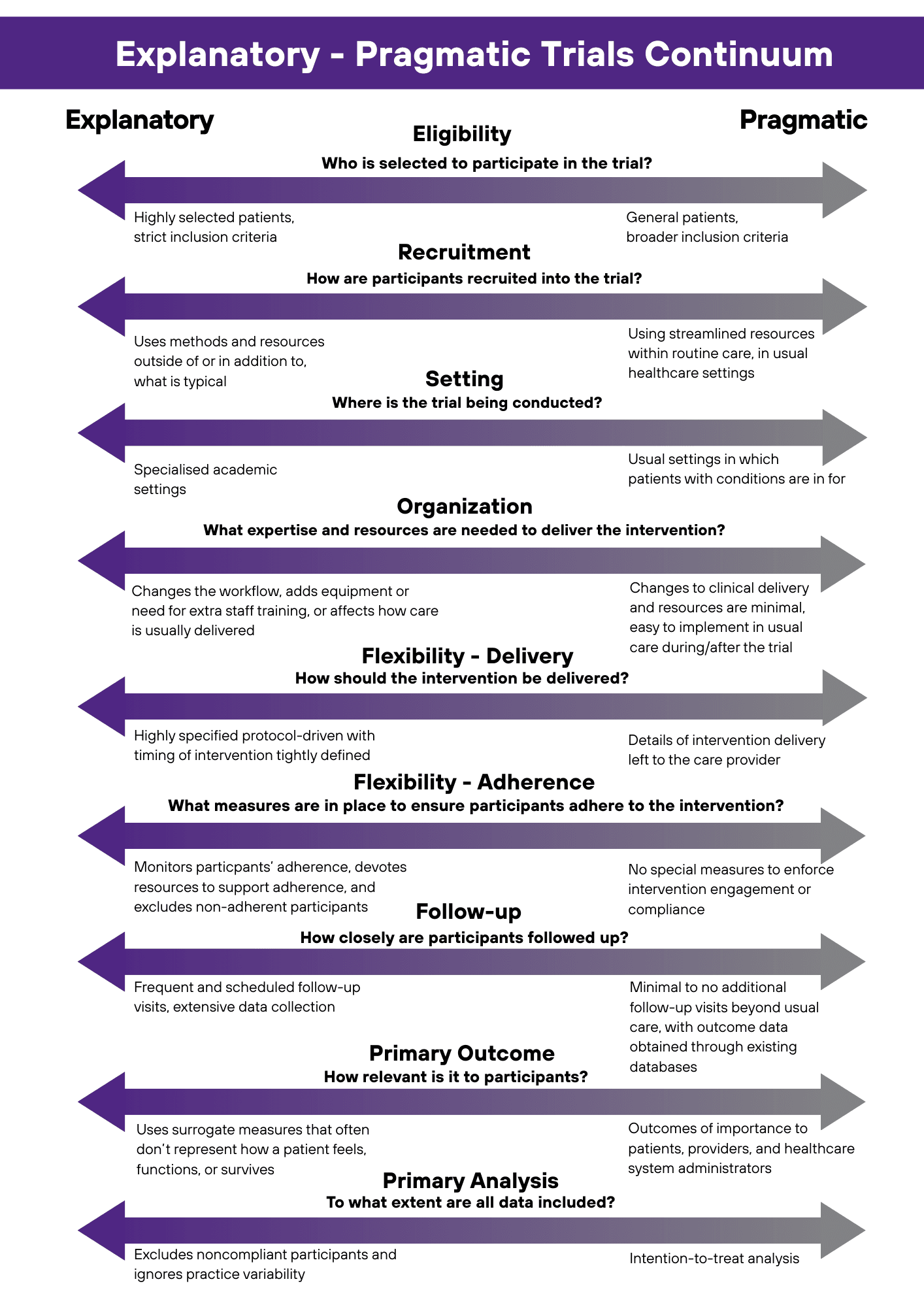
Explanatory and pragmatic trial design choices across eligibility, recruitment, setting, organization, delivery, adherence, follow-up, primary outcome, and primary analysis

Explanatory–pragmatic trials continuum

A visual comparison of explanatory and pragmatic design choices across the nine PRECIS-2 domains.

Open image ↗
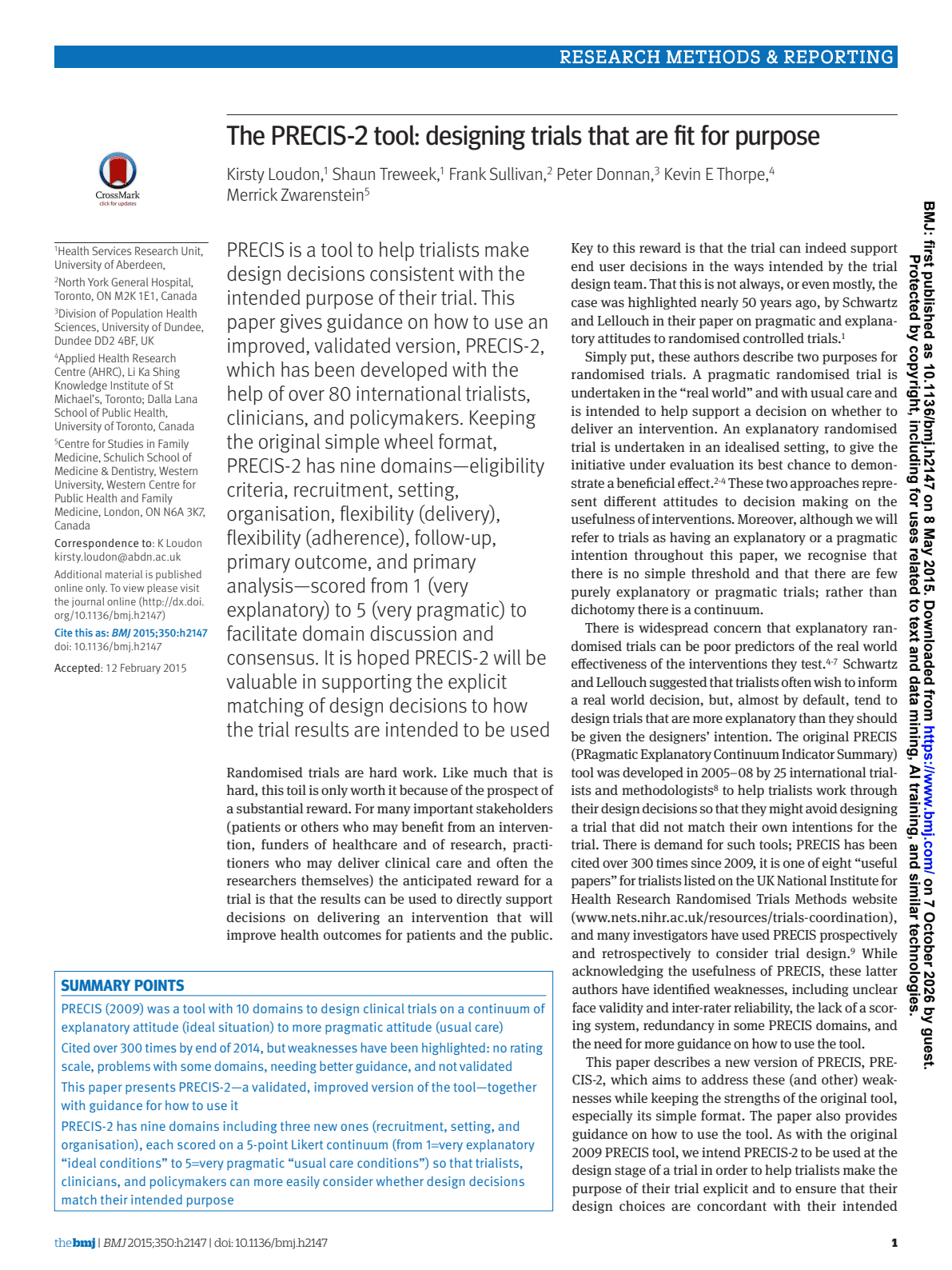
First page of The PRECIS-2 tool: designing trials that are fit for purpose↗

The PRECIS-2 tool: designing trials that are fit for purpose

Abstract

PRECIS is a tool to help trialists make design decisions consistent with the intended purpose of their trial. This paper gives guidance on how to use an improved, validated version, PRECIS-2, which has been developed with the help of over 80 international trialists, clinicians, and policymakers. Keeping the original simple wheel format, PRECIS-2 has nine domains—eligibility criteria, recruitment, setting, organisation, flexibility (delivery), flexibility (adherence), follow-up, primary outcome, and primary analysis—scored from 1 (very explanatory) to 5 (very pragmatic) to facilitate domain discussion and consensus. It is hoped PRECIS-2 will be valuable in supporting the explicit matching of design decisions to how the trial results are intended to be used

Open paper (PDF) ↗
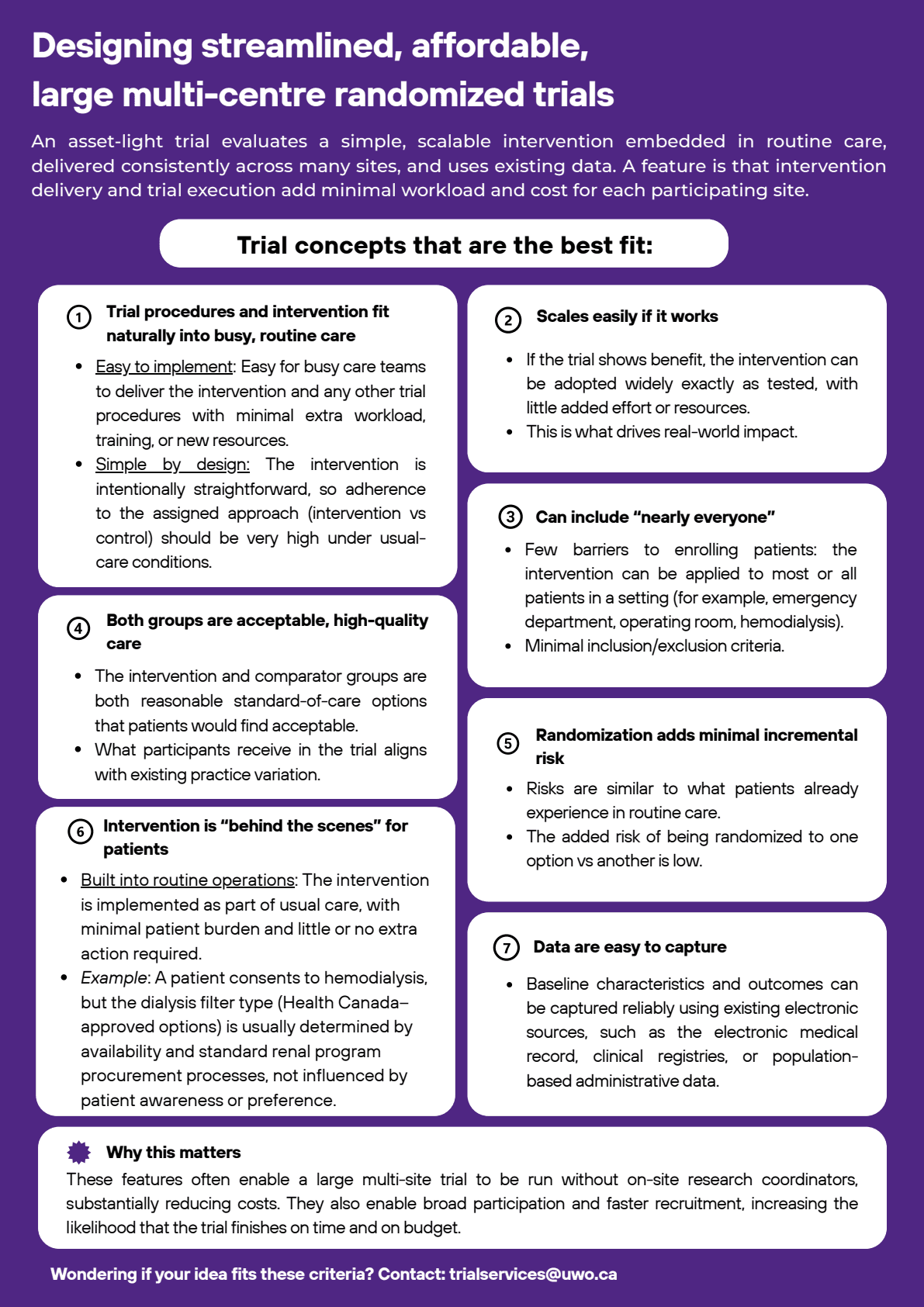
First page of Designing streamlined, affordable, large multi-centre randomized trials↗

Designing streamlined, affordable, large multi-centre randomized trials

One-page guide to simple, scalable trial concepts that fit routine care, use existing data, and minimize workload and cost across participating sites.

Open handout (PDF) ↗
Clinical Trials Leadership ProgramWestern University · London, Ontario
trialservices@uwo.ca